

This brief answers
- How does co-buying a two- or three-family home in Boston work?
- What does the City of Boston's co-purchasing pilot offer, and who qualifies?
- What do this week's national numbers say about contracts, price cuts and prices?
- The City of Boston offers 0% deferred loans of up to $50,000 per household to help two or three households buy a two- or three-family home in Boston together.1
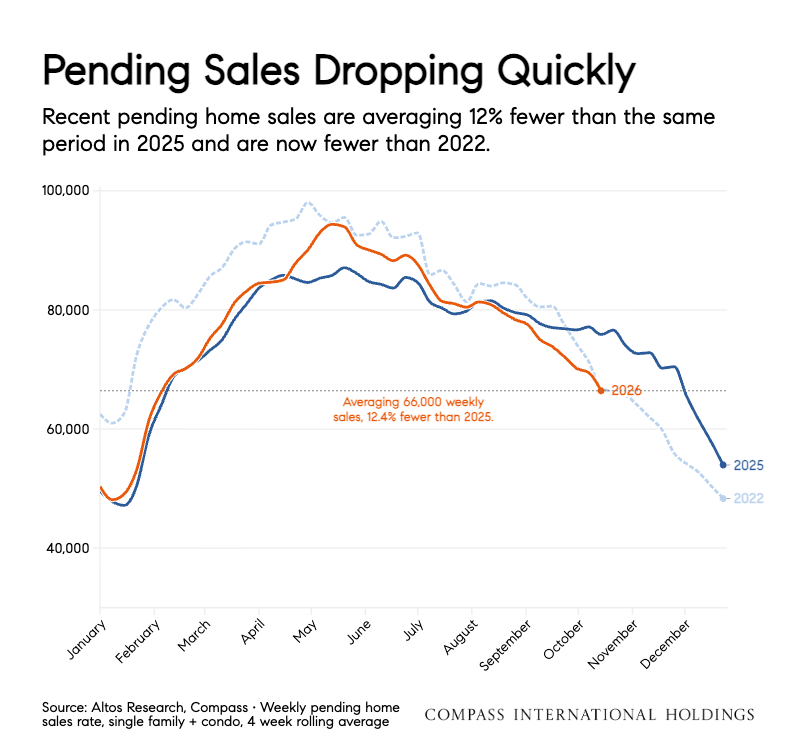
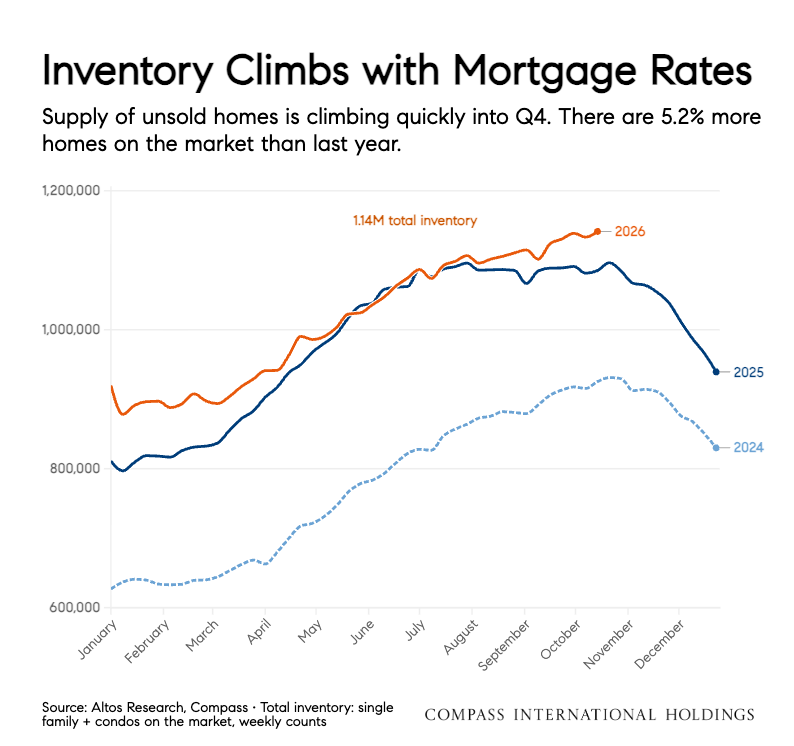
- Nationally, about 66,000 homes a week went under contract on a four-week average, 12.4% fewer than last year, while 1.14 million homes were for sale, 5.2% more.5
- Freddie Mac's 30-year average was 7.40% on October 15, the same as the week before.6
Why more people are buying together
If you've been looking at homes in Boston lately, you know how hard prices can make it to get in the door, and many first-time buyers are getting creative. This week MassLive shared the story of six people who bought one Boston home together, with one mortgage and a big backyard.7 I checked the details against the City of Boston's own pages, and the heart of the story holds up. The city says a household earning Boston's median income of $106,015 can afford about $500,000 after using every city assistance program, yet only 12% of 2024 Boston home sales were priced under that.1 The city also puts the 2024 median price of a two-bedroom condo at about $790,000.1
Buying a two- or three-family home with friends or relatives is one way people are closing that gap. Each household lives in its own unit, and everyone shares one mortgage. Co-buying isn't new in Boston, but until recently most people learned how to do it by asking around. The Boston Globe profiled a Roslindale group that had trouble finding a lender willing to put several unrelated people on one loan.3 To be careful, the figures here come from the city and other cited sources rather than the article itself, which I wasn't able to review in full. What makes this moment different is that Boston now has a program built for exactly this kind of purchase.
How the city's co-purchasing pilot works
The Boston Home Center and the Mayor's Housing Innovation Lab launched the co-purchasing pilot in 2025 to help groups like this one buy a home together.4 Each household qualifies based on its own income and can receive its own city loan, and then everyone closes together on one mortgage.
- Each household qualifies on its own, with its own income test and up to $50,000 from the city.
- Everyone shares one mortgage, with a city-participating lender and a written co-ownership agreement.
- Together you buy one two- or three-family home, and each household lives in its own unit. A third household is optional.
How to read it. Each box on the left is one household that qualifies on its own. The arrows show the households joining one shared mortgage, which buys one home where each household lives in its own unit. A third household is optional. Source: City of Boston.1
| What | The rule (as of August 2026) |
|---|---|
| City loan up to $50,000 | For each household earning up to 100% of the area median income ($137,200 for a two-person household) |
| City loan up to $35,000 | For each household earning up to 135% of the area median income ($185,200 for a two-person household) |
| Interest on the city loan | 0%. Nothing is due until you sell, transfer or refinance. This is separate from your mortgage, which has its own interest rate. |
| Your own money | At least 1.5% of the price of your share |
| Savings limit | Under $100,000 in liquid assets, not counting retirement accounts |
| The home | A two- or three-family home in the City of Boston, with one vacant unit for each buying household |
| Also required | First-time buyer status, CHAPA-approved homebuyer classes, living in the home, a written co-ownership agreement, and a city-participating lender |
Source: City of Boston, Co-Purchasing Housing Pilot Program, page updated August 21, 2026.1 Income limits change every year and are subject to change at any time.
Looking at each household separately makes a real difference, because two or three incomes combined would often be too high for the city's regular first-time buyer help.2 The pilot only covers homes inside the City of Boston, so it doesn't apply in nearby cities like Somerville or Methuen. Before you plan around these limits, it's worth a quick call to the Boston Home Center at 617-635-3880 to confirm them.1
Once the numbers work, I'd encourage you to spend real time on the co-ownership agreement. It should cover how you'll split repairs, what happens if someone wants to sell or move out, and how you'll make decisions together. Through the city's program, the Community Dispute Settlement Center helps groups write one (cdschousing@communitydispute.org).1 For the city loan you'll need one of the city's participating lenders, and you can choose any lender on that list. Outside the program, you are always free to choose your own lender.

This week's national market
Whether you buy on your own or with others, the wider market shapes how much room you have to negotiate, so it helps to know where things stand this week. Nationally, the housing market is still slowing. Mike Simonsen of Compass, who founded Altos Research, describes it as a broad slowdown that may still be in its early stage.5 Rates dipped this week but are still close to their highest levels in about 20 years, and buyer demand hasn't picked back up yet.
Mortgage rates are a big part of the story. Freddie Mac's weekly average for a 30-year fixed mortgage was 7.40% on October 15, unchanged from October 8.6 Simonsen's daily rate readings showed a dip from about 7.5% to 7.3% during the week.5 The two measures are calculated differently, so they don't always match.
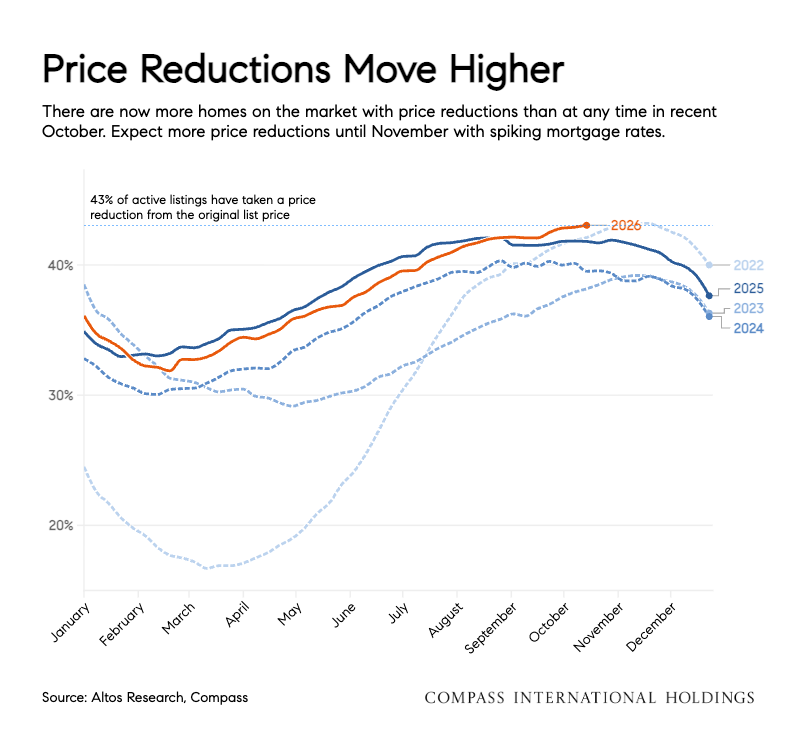
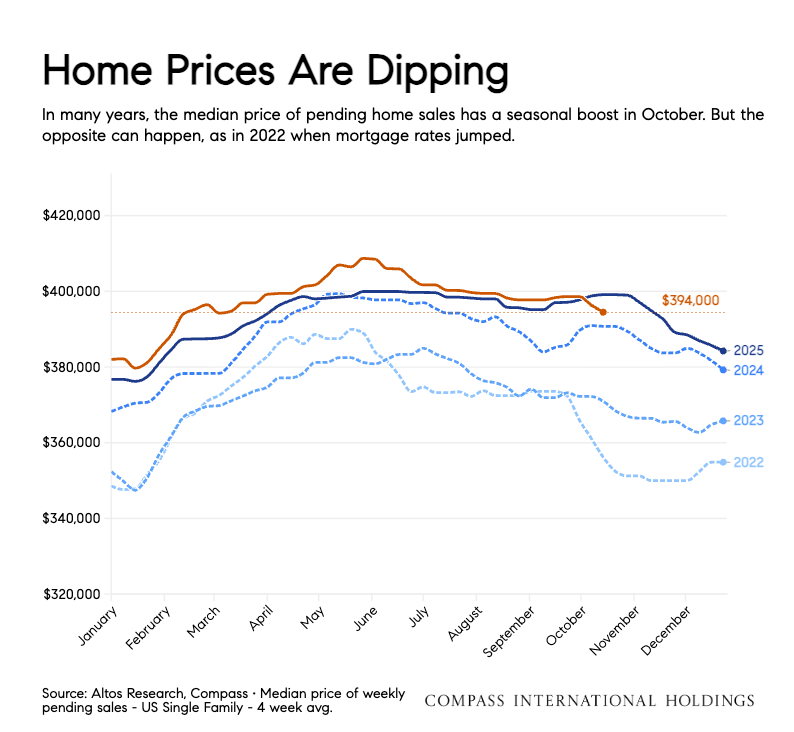
Four numbers from this week show the slowdown most clearly.
Source: Mike Simonsen, Compass International Holdings, using Altos Research data, October 19, 2026.5 National figures, subject to change at any time.
View the data
| Measure | Value |
|---|---|
| Homes going under contract per week, 4-week average, mid-Oct. 2026 | 66,000 |
| Change vs. same period of 2025 | −12.4% |
View the data
| Measure | Value |
|---|---|
| Homes for sale, mid-Oct. 2026 | 1.14 million |
| Change vs. a year ago | +5.2% |
View the data
| Measure | Value |
|---|---|
| Listings with a price cut, mid-Oct. 2026 | about 43% |
View the data
| Measure | Value |
|---|---|
| Median price of pending sales, mid-Oct. 2026 | $394,000 |
| Change vs. a year ago | −1.2% |
| Implied year-ago price (our calculation, rounded) | about $398,800 |
Even with fewer buyers, home prices have barely moved nationally in about four years. Simonsen points out that many owners don't have to sell. People who bought recently don't want to sell at a loss, and people who bought before 2022 are holding mortgages with much lower rates. He notes that this may be starting to change.5 Sale prices are usually the last number to move, so this October's softer contract prices would likely show up in closed sales after the new year. No one can predict the market with certainty.
All of these are national numbers, and the Greater Boston Area, its surrounding suburbs, and the North Shore can look quite different. If you'd like to see the numbers for your town, I'm always happy to pull them for you. For how this fall compares with past years, see Issue 07: Fewer Offers, More Price Cuts, and for how rates connect to rents, see Issue 08.
What this may mean for you
Put together, a slower market and a new city program open a few doors, and what they mean for you depends on where you sit.
If you're buying, more homes to choose from and more sellers cutting prices can mean more room to negotiate. With rates near 7.4%, sharing one mortgage across two or three households is one way some buyers are making the monthly payment work.
If you're selling, pricing carefully from the first day matters more when about 4 in 10 listings have already cut their price. If you own a two- or three-family home in Boston, co-buyers using the city program may be one more group of buyers looking.
If you're thinking about buying with someone, start with the agreement before the house. Talk through money, repairs and how someone could leave, then have each household's eligibility checked. When your group is ready to start looking, I'd be glad to be your real estate advisor and help you find a two- or three-family home that works for everyone.
If you're thinking about buying with friends or family, I'd love to be your real estate advisor and help your group find the right home. Reach out anytime.
Thanks for reading. Warmly,
Nicole
Common questions
Can friends who aren't related buy a home together in Boston?
Yes. The City of Boston's co-purchasing pilot is built for two or three households buying a two- or three-family home in Boston together on one mortgage, whether they are friends or relatives. Each household has to meet the program rules on its own.1
How much can the City of Boston lend a co-buying household?
Up to $50,000 per household earning up to 100% of the area median income, or up to $35,000 for households earning up to 135%. These are 0% deferred loans, repaid when the home is sold, transferred or refinanced. The limits are from the city's August 2026 update and change every year.1
Are home prices falling nationally?
Only slightly so far. The median price of homes going under contract was $394,000 in mid-October 2026, 1.2% lower than a year earlier, according to Altos Research and Compass data. About 43% of homes for sale have had a price cut.5
Sources
- City of Boston, Co-Purchasing Housing Pilot Program, page updated August 21, 2026, retrieved October 12, 2026.
- Smart Cities Dive, report on Boston's co-purchasing pilot (2025), retrieved October 12, 2026.
- The Boston Globe, opinion piece on co-owning a home in Boston, May 15, 2025, retrieved October 12, 2026.
- City of Boston, announcement of the Co-Purchasing Housing Pilot Program, March 20, 2025, retrieved October 19, 2026.
- Mike Simonsen, Compass International Holdings, using Altos Research data. Weekly national update and charts, October 19, 2026. Charts used with permission.
- Freddie Mac, Primary Mortgage Market Survey, 30-year fixed rate, via FRED (MORTGAGE30US), retrieved October 19, 2026.
- MassLive, post on Boston's co-purchasing movement (October 2026). The full article was not independently reviewed.

Nicole Protheroe is a licensed Massachusetts real estate agent with The QUONAE Group at Compass, serving the Greater Boston Area, its surrounding suburbs, and the North Shore in English and Spanish. Before real estate she spent more than 12 years in pharmaceutical research.