 The QUONAE GroupCompass
Compass Profile
The QUONAE GroupCompass
Compass Profile
The QUONAE GroupCompass
Compass Profile
The QUONAE GroupCompass
Compass Profile

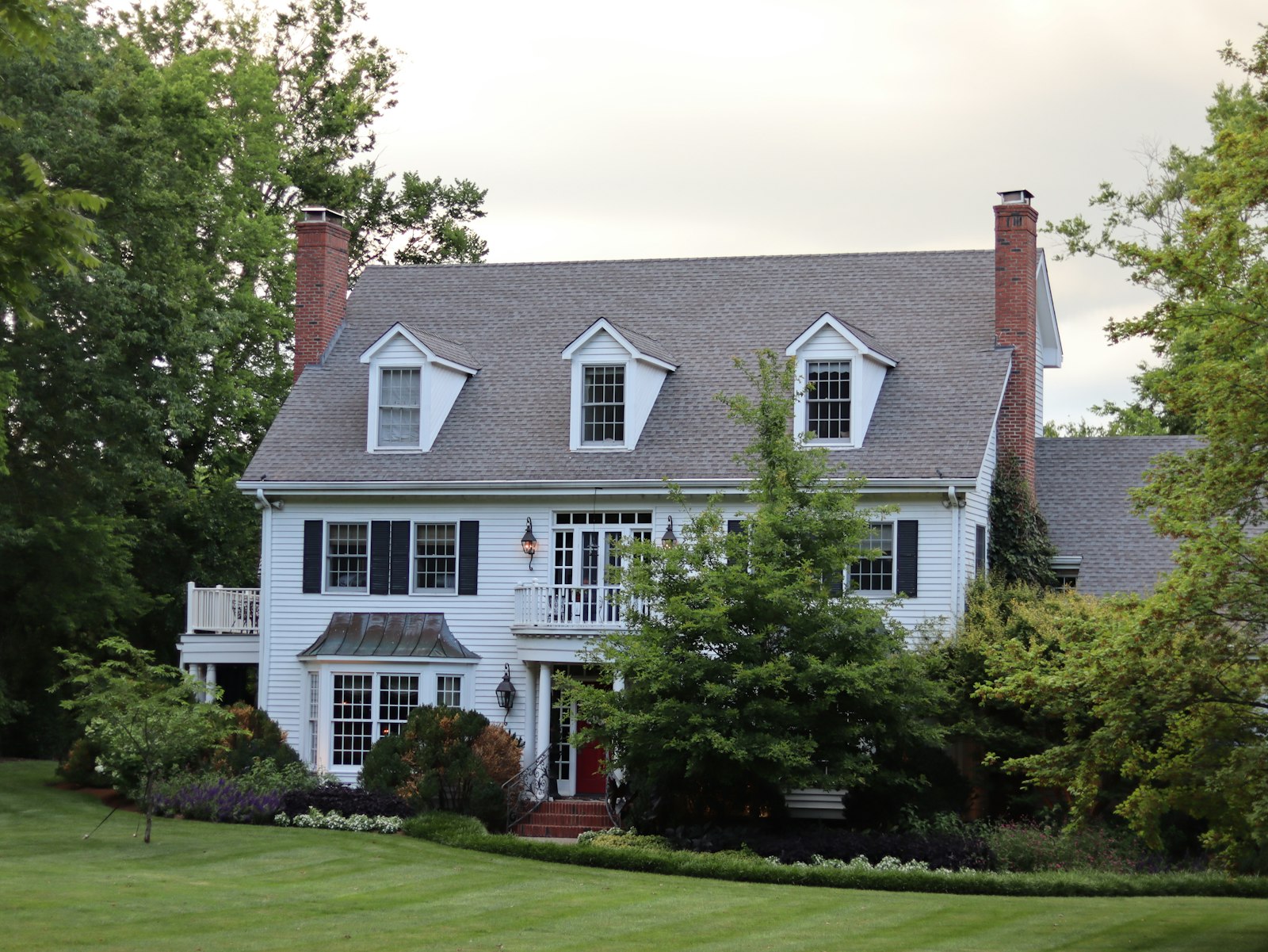
With rates above 7%, many buyers are focused on the monthly payment. This brief compares a price cut with a temporary rate buydown on a typical Massachusetts home, using public data and standard loan math, so you can see how each one works whether you're buying or selling.
By Nicole Protheroe · The QUONAE Group at Compass · September 24, 2026
Most buyers don't shop for a price as much as for a monthly payment they can live with. When rates rise, that payment rises too, even if the price stays the same.
A year ago, the average rate was 6.30%.[1] On the same Massachusetts home, that difference alone adds about $290 to the monthly payment. Buyers are responding. Nationally, the number of homes going under contract is running about 4% behind last year,[7] and more than 42% of homes for sale have cut their asking price.[6]
When a home needs a push, a seller usually has two main options.
The table below compares the two on a typical Massachusetts home, using the $665,000 median price,[2] 10% down (a $598,500 loan), and the current 7.03% average rate.[1]
| What the seller does | Seller's cost | Buyer's payment drop, year 1 |
|---|---|---|
| 2-1 buydown | ≈ $14,000 | $770/mo (then $394/mo in year 2) |
| 1-0 buydown | ≈ $4,700 | $394/mo |
| Price cut of $14,000 | $14,000 | ≈ $84/mo |
| Price cut of $4,700 | $4,700 | ≈ $28/mo |
Rate: Freddie Mac.[1] Home price: The Warren Group.[2] Payments and costs: our own calculation (see “How we calculated” below).
Drop in the buyer's monthly payment in year 1 · $665,000 home, 10% down, 7.03%
How to read it: compare each buydown with the price cut right below it. They cost the seller the same, but the buydown lowers the buyer's first-year payment about 9 to 14 times more. Calculated with standard 30-year amortization; principal and interest only.
To match the 1-0 buydown's $394 first-year savings with a price cut alone, the seller would need to lower the price by about $65,600. A price cut costs more because it lowers the payment every year for the life of the loan, while a buydown focuses the same money on the first year or two of payments.
Massachusetts sellers pay the deed excise, or "tax stamps," at $2.28 per $500 of sale price.[8] A $65,600 price cut would save the seller only about $300 in stamps, so it doesn't change the comparison.
A buydown helps with the monthly payment, but it can't fix a price that's too high. If a home is listed above what comparable homes are selling for, buyers will notice, and a price adjustment may be the right move. Sellers often resist lowering prices, which is why prices tend to lag behind a slowdown, a pattern Compass Research calls “downside stickiness.”[9]
Often, yes. A seller-paid buydown lowers your payments for the first year or two, and someone else covers the cost. The key is to plan ahead for the higher payment once the buydown ends.
Monthly principal and interest · $598,500 loan at a 7.03% note rate
How to read it: each column is your monthly payment in that year. The dark column is the full payment you'll owe from year 3 on, so that's the number to budget around. Calculated; principal and interest only.
| Year | Rate paid | Monthly principal & interest | Lower than full payment by |
|---|---|---|---|
| Year 1 | 5.03% | $3,224 | $770 |
| Year 2 | 6.03% | $3,600 | $394 |
| Year 3 on | 7.03% | $3,994 | $0 |
Our calculation: $598,500 loan (the $665,000 median home with 10% down), 30-year fixed, principal and interest only.
Seller help is capped. On a conventional loan backed by Fannie Mae for a home you'll live in, the seller can contribute up to 3% of the price if you put down less than 10%, 6% with 10% to 25% down, and 9% with more than 25% down. A seller-paid buydown counts toward that cap.[4] On the Massachusetts example above, a 6% cap is about $39,900, so a 1-0 or 2-1 buydown fits with room to spare. Other loan types (FHA, VA) have their own limits; your lender can confirm yours.
Temporary buydowns also follow set rules. They can last no more than three years, and the rate can rise by no more than 1 point per year.[3]
Every home and every buyer is different. Let's run the numbers on yours together.
A buydown is money paid at closing, often by the seller, that lowers the buyer’s interest rate for the first year or two. A 1-0 buydown lowers the rate by 1 point in year one; a 2-1 buydown lowers it by 2 points in year one and 1 point in year two. After that, the loan returns to its full rate.
It depends on the home and the buyer. In our example on the $665,000 Massachusetts median home with 10% down at 7.03%, a buydown lowers the first-year payment about 9 to 14 times more than a price cut of the same cost. A price cut, however, lowers the payment for the life of the loan, and if a home is priced above comparable sales, a price adjustment may be the right move.
On a conventional Fannie Mae loan for a primary residence, seller contributions are capped at 3% of the price with less than 10% down, 6% with 10% to 25% down, and 9% with more than 25% down. A seller-paid buydown counts toward that cap. FHA and VA loans have their own limits.
Nicole Protheroe is not a licensed loan officer. Rate, loan, and buydown information in this brief is based on the cited sources, which are subject to change. For guidance on your own loan, please speak with a licensed loan officer.
All payments use standard 30-year fixed amortization on a $598,500 loan (10% down on the $665,000 Massachusetts median), principal and interest only: $3,994/mo at 7.03%, $3,600/mo at 6.03%, $3,224/mo at 5.03%. Buydown costs are the sum of the monthly differences over the subsidy period: 1-0 ≈ $394 × 12 = $4,728; 2-1 ≈ $770 × 12 + $394 × 12 = $13,969. Price-cut effects assume 90% of the cut is financed at 7.03%. Figures are rounded and are estimates, not sourced figures. Actual buydown costs are set by the lender.
The multiples in Question 2 (about 9× and 14×) compare these calculated first-year payment drops: $770 vs. $84 and $394 vs. $28. The only quoted phrase (“downside stickiness,” Compass Research) is in quotation marks with a citation.
Monthly payment of $3,994, and the extra $290 a month
A mortgage payment is found with the standard loan formula: Payment = Loan × r ÷ (1 − (1 + r)−360) where r is the yearly rate ÷ 12 and 360 is the number of monthly payments in 30 years.
Buydown costs and payment drops in the table
The $65,600 price cut and the $300 in tax stamps
The 2-1 buydown payment steps
A mortgage payment is found with the standard loan formula: Payment = Loan × r ÷ (1 − (1 + r)−360) where r is the yearly rate ÷ 12 and 360 is the number of monthly payments in 30 years.
The 6% seller-help cap